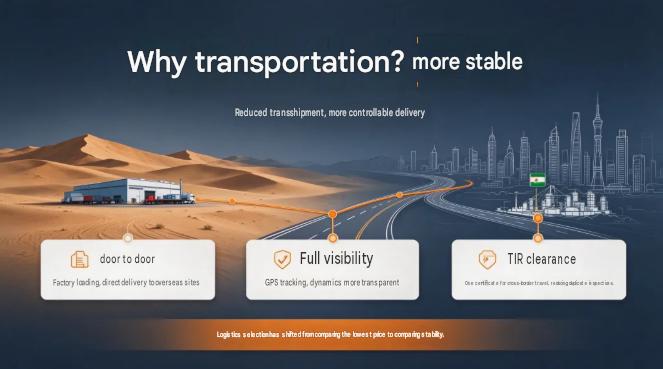
Sea freight offers the lowest rates but is highly susceptible to port congestion, making it less predictable. Rail transport provides reasonable stability and is well-suited for large-volume, planned shipments, though its fixed schedules offer limited flexibility. Air freight is the fastest option but comes at a higher cost, making it appropriate only for high-value, urgent cargo. Road transport (trucking) offers flexible routing and fewer transshipment points; it supports door-to-door delivery and has become a preferred choice for many foreign trade clients. It is ideal for project materials, machinery and equipment, auto parts, construction materials, and electronic products—goods for which reliable delivery is paramount and unexpected delays are unacceptable.
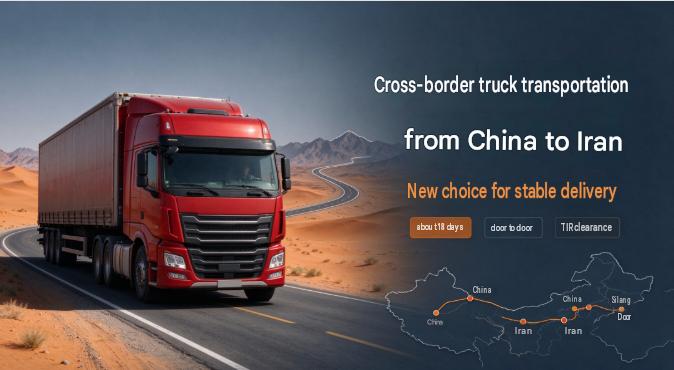
Cargo is collected domestically and categorized for loading—whether it consists of general goods, items containing batteries or magnets, or large, crated equipment. Invoices and packing lists must be complete; for goods with batteries or magnets, relevant test reports must be prepared in advance. Trucks are photographed during loading and sealed to minimize the need for opening containers or trailers in transit. Shipments typically exit China via border crossings in Xinjiang, traveling through Central Asia to Iran; the use of TIR (Transports Internationaux Routiers) carnets facilitates customs clearance and reduces the frequency of redundant inspections. For LTL (less-than-truckload) shipments, extra caution is required, as an issue with the documentation for a single consignment can delay the release of the entire truckload. Upon arrival in Iran, the border crossing is selected based on the final destination city: shipments bound for Tehran or Mashhad typically enter via northeastern crossings, while those destined for Tabriz use northwestern crossings. Documentation is pre-screened, allowing for direct distribution upon entry without the need to detour through the capital.
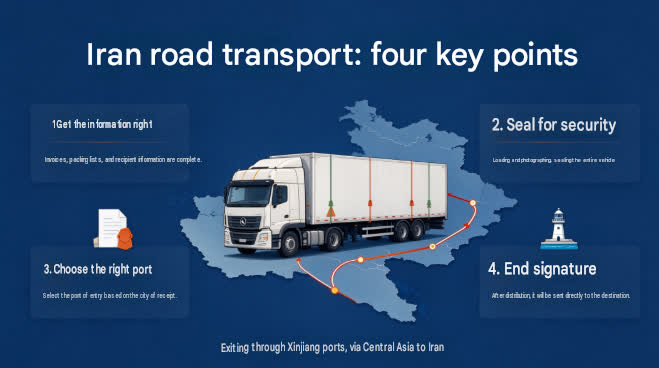
Road transport offers three major advantages: door-to-door service directly from the factory to the overseas project site, full-journey visibility via GPS, and streamlined customs clearance through the TIR system. For project-based orders in Iran, the long lead times mean that logistics delays—which can lead to port demurrage, the need for rerouting, or client claims—often result in hidden costs that far exceed the original freight charges. Consequently, many foreign trade enterprises have shifted their logistics strategy: rather than focusing solely on the lowest price, they now prioritize delivery stability, making road transport an increasingly vital alternative to sea freight.